
Why a Seasonal Roof Calendar Matters in Oklahoma
Oklahoma doesn't do mild weather. Homes across Oklahoma City, Norman, and the surrounding towns deal with spring hailstorms, summer heat that sits in the 100s for weeks, fall wind that strips trees bare, and winter cold snaps that can drop below freezing overnight. A roof built for this climate has to handle all four extremes in the same calendar year.
That's why a seasonal check makes more sense than waiting for a leak to show up. Most roof problems don't start as emergencies, they start small, like a lifted shingle edge or a clogged valley, and they get worse every time the weather turns. A simple season-by-season routine catches those small issues while they're still cheap and easy to fix.
Why Each Season Stresses a Roof Differently
Shingles, flashing, and the roof deck underneath all expand and contract with temperature swings. Oklahoma's wide range between summer highs and winter lows puts more cyclical stress on roofing materials than milder climates see, which is part of why regular checks matter here more than in some other states.
Spring: Wind and Hail Season
Spring is Oklahoma's most active weather season, with thunderstorms capable of producing damaging wind and hail. This is when storm and hail damage shows up most often, from bruised shingles to bent flashing to debris strikes.
A spring check is really two things: a look at what the past winter did to the roof, and a readiness check before storm season ramps up. Loose shingles, cracked sealant, and clogged gutters left over from winter all become bigger problems once spring storms arrive.
Summer: Heat and UV Exposure
Summer doesn't bring sudden damage the way spring does, but the heat and sun add up over time. Attic temperatures can climb well above outdoor air temperature, which accelerates shingle aging and can shorten the life of a roof that isn't ventilated well.
Summer is a good time to check attic ventilation and look for any early signs of UV wear, like granule loss in the gutters or shingles that look brittle at the edges. It's a quieter season for roof problems, but a good one for a visual check since there's no storm activity to work around.
| Season | Main Risk | What to Check |
|---|---|---|
| Spring | Wind and hail | Loose shingles, dented flashing, clogged valleys |
| Summer | Heat and UV | Attic ventilation, granule loss, brittle shingles |
| Fall | Leaves and debris | Gutters, valleys, tree limbs overhanging the roof |
| Winter | Freeze and ice | Attic moisture, ice buildup at the eaves, flashing seals |
What's Actually Happening Up There
A roof is a system, not a single surface. Shingles shed water, flashing seals the joints and penetrations like chimneys and vents, and the deck underneath ties it all together. A skylight or flashing seal that fails doesn't always leak right away, it can let moisture in slowly over months before anyone notices a stain inside.
That's part of why seasonal checks matter more than reacting to visible leaks. By the time water shows up on a ceiling, it's often been finding its way in for a while. Catching a lifted shingle or a cracked seal early keeps a small fix from turning into a bigger repair.
Step-by-Step: A Seasonal Roof Check
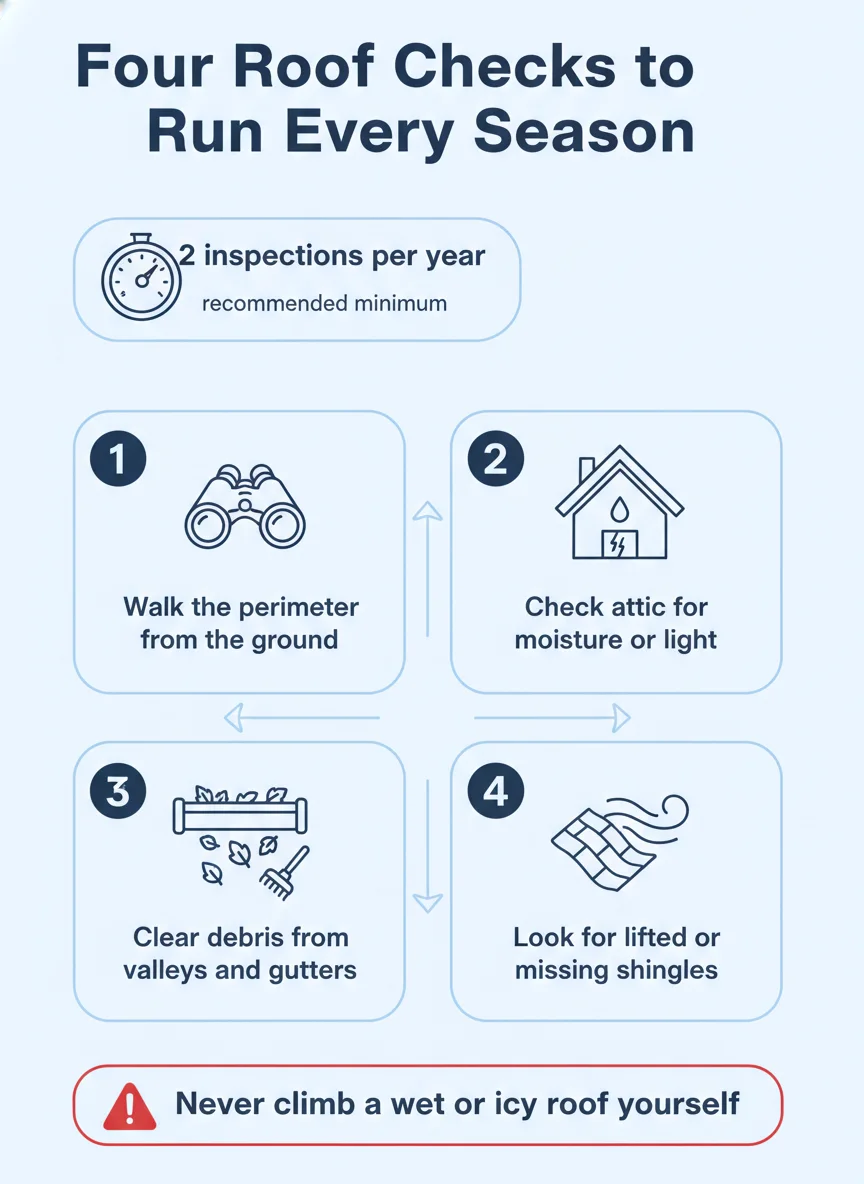
You don't need to get on the roof to do most of this. A pair of binoculars, a flashlight for the attic, and a walk around the house cover the basics.
- Walk the perimeter: Look up from the ground at each side of the house, checking for shingles that look lifted, curled, or missing compared to the rest of the roof.
- Check the attic: Use a flashlight to look for daylight through the roof deck, damp insulation, or a musty smell that could point to a slow leak.
- Clear the gutters and valleys: Remove leaves and debris so water has a clear path off the roof instead of pooling against shingles or flashing.
- Look at flashing points: Check around chimneys, vents, and skylights for cracked sealant or flashing that's pulled away from the surface.
- Note any granule buildup: Granules collecting in gutters or at downspouts are a sign of shingle wear, more common as a roof ages.
- Trim overhanging limbs: Branches that brush the roof in wind can wear through shingle surfaces over time and should be cut back.
What You'll Typically Find
Most seasonal checks turn up nothing urgent, which is the point. But when something does show up, it usually falls into one of two buckets: wear that's happened gradually, or damage from a specific event like a windstorm or hail.
Gradual Wear
This looks like granule loss, slightly curled shingle edges, or sealant that's gone brittle and cracked. It's normal aging and doesn't need immediate action, but it's worth tracking from one season to the next so you know if it's progressing faster than expected.
Event Damage
This looks like a cluster of missing shingles after a windstorm, dented flashing after hail, or a sudden leak after a heavy rain. These are worth addressing quickly since water that's already found a way in will keep finding that same path every time it rains.
What You Can Check Yourself vs. When to Call a Pro
The ground-level and attic checks described above are safe and reasonable for most homeowners to do on their own, a few times a year. They don't require climbing anything and they give you a good general sense of whether something's changed since the last check.
Getting on the roof itself is a different story. Walking shingles without the right footwear or experience can damage them, and steep or wet surfaces are genuinely dangerous. Anything involving flashing repair, replacing damaged shingles, or getting a close look at storm damage is worth leaving to a licensed roofer.
If a seasonal check turns up something you're not sure about, a photo from the ground and a call to a roofing contractor usually sorts it out fast. It's a lot cheaper to ask the question early than to wait until the next heavy rain tells you the answer.
Building the Habit
A seasonal roof calendar isn't complicated, it's really just four short checks spread across the year that take the guesswork out of roof maintenance. Pairing it with a checklist for the morning after a storm covers both the routine and the unexpected.
Homeowners who stick with a simple routine like this tend to catch problems while they're still small, which is better for the roof and easier on the wallet. If a seasonal check turns up something worth a second look, All The Way Up Construction is available to take a closer look.
Frequently asked questions
How often should I have my roof checked in Oklahoma?
Most roofing professionals recommend two checks a year, once in spring before storm season and once in fall before winter. A quick look after any major wind or hail event is smart too, even if nothing looks obviously wrong from the ground.
What season is hardest on an Oklahoma roof?
Spring tends to do the most damage because it brings the state's heaviest wind and hail activity. Summer heat and winter freeze both add stress in their own way, but spring storms are usually what causes sudden, visible damage.
Do I need to clean my gutters every season?
Fall is the most important time to clear gutters because of leaf buildup, but a spring check after storm season is worth doing too. Clogged gutters hold water against the edge of the roof, which can lead to problems well beyond the gutter itself.
Can summer heat actually damage a roof?
Yes, prolonged UV exposure and high attic temperatures gradually dry out and age shingles over the years. It's a slower kind of wear than storm damage, but it's one of the main reasons shingle roofs eventually need replacing.
What should I look for in the attic during a seasonal check?
Look for daylight coming through the roof deck, damp insulation, or a musty smell, all of which point to a leak somewhere above. Catching these signs early from inside the attic is often how small problems get fixed before they show up as ceiling stains.