
Why Oklahoma Roofs Get Dark Streaks
If you've noticed dark, almost black streaks running down one slope of your roof, you're not imagining it and it's not soot from a chimney. It's algae, and it's one of the most common cosmetic issues homeowners across the Oklahoma City metro deal with, especially on homes with mature trees or north-facing slopes that stay shaded most of the day.
The humidity swings here, hot and sticky summers followed by wet spring stretches, create exactly the kind of damp, warm conditions algae needs to take hold. It's not a sign your roof was installed wrong or that your shingles are bad, it's just biology finding a place to grow, and it happens to roofs of every age and every brand.
What Is Actually Growing on the Shingles?
The organism behind those streaks is called Gloeocapsa magma, a type of algae that feeds on the limestone filler used in most asphalt shingles. It doesn't eat the shingle itself the way wood rot eats a deck board, but the dark pigment it produces as a protective coating is what you see as the streak.
How It Spreads
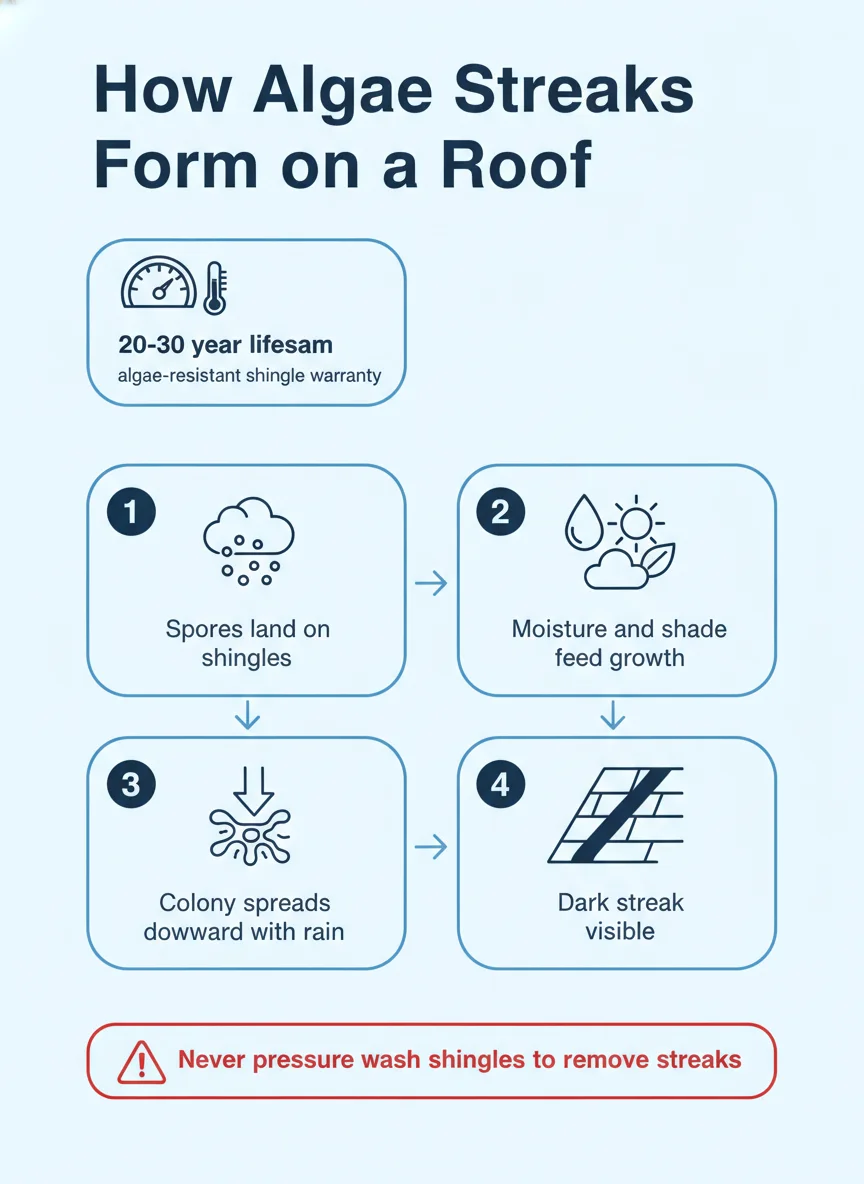
Algae spores travel easily on wind, rain, and even bird activity, which is why streaking often starts near a tree line or a shaded valley and spreads outward over a season or two. Once a colony is established, every rain shower helps carry spores further down the slope, which is why the streak pattern usually looks like it's dripping from a single point.
Neighborhoods tend to see it cluster, since homes built around the same time with the same shingle batch and similar tree cover often show streaking within a year or two of each other. It's one reason you'll sometimes see three houses in a row on the same street with nearly identical streak patterns.
Why North Slopes Show It First
A north-facing slope gets less direct sun, which means it holds moisture and stays cooler longer after a rain or a heavy morning dew. That extra moisture window is exactly what algae needs to establish itself, so homeowners almost always see the streaking appear there first, sometimes years before it shows anywhere else on the house.
South and west-facing slopes that bake in direct sun most of the day tend to dry out fast enough that algae has a much harder time getting a foothold, even on an older roof. That's normal and doesn't mean anything is wrong with the shingles on the sunnier side.
| Factor | Algae-Prone Slope | Low-Risk Slope |
|---|---|---|
| Sun exposure | Shaded most of the day | Direct sun most of the day |
| Moisture retention | Stays damp after rain or dew | Dries quickly |
| Tree cover nearby | Common, adds organic debris | Minimal or none |
| Typical streak age before visible | 1 to 3 years | Often never visible |
Is It Just Cosmetic, or a Sign of Something Else?
In most cases, algae streaking is purely a cosmetic issue and doesn't mean the shingles underneath are failing. It can make a roof look years older than it actually is, which matters if you're planning to sell, but it isn't the same thing as granule loss, cracking, or a leak.
That said, a heavy colony left untreated for several years can trap extra moisture against the shingle surface, which in a worst case can shorten the lifespan of that section. If the streaking is paired with curling edges, bald patches where granules have worn away, or soft spots in the decking, that's a different conversation and worth having a roof repair visit look at the whole picture, not just the discoloration.
Step-by-Step: Treating Algae Streaks Safely
If you want to tackle the streaking yourself, the method matters more than the product. Here's the safe order of operations most roofing manufacturers recommend for homeowners doing it on their own.
- Protect landscaping first: Wet down nearby plants and cover anything delicate with plastic sheeting, since cleaning solutions can be harsh on grass and shrubs.
- Mix a gentle solution: Use a cleaner labeled safe for asphalt shingles rather than a generic bleach mix, which can be too aggressive and strip the shingle's surface.
- Apply from the ground up: Use a low-pressure pump sprayer, working from the bottom of the slope upward so the solution has time to sit before it runs.
- Let it dwell: Give the solution 15 to 20 minutes of contact time so it can break down the algae before rinsing, checking the product label for exact timing.
- Rinse with a garden hose: Use normal household water pressure only, never a pressure washer, which strips the protective granules and can void a manufacturer warranty.
- Check surrounding plants: Rinse landscaping thoroughly afterward to flush away any runoff that may have pooled near the foundation line.
What You'll Find Once the Streaks Are Gone
A Clean Slope With Even Color
Once the algae is treated and rinsed off, most homeowners are surprised at how much lighter and more even the shingle color looks underneath. If the shingles are in good shape, the slope should look close to its original color, just without the dark streaking pattern.
This is also a good time to walk the yard and look up at the slope from a distance, checking for granule loss, curling, or any spots where the color looks patchy rather than just dark from algae. That kind of visual check costs nothing and tells you whether you're just dealing with a cosmetic issue or something that needs a closer look.
When Streaks Come Right Back
If the streaking returns within a season or two of cleaning, that usually means the underlying conditions, shade, moisture, nearby trees, haven't changed, so the algae has a fast path back in. This is common on older standard shingles and isn't a sign the cleaning was done wrong.
At that point, many homeowners decide it's worth switching to algae-resistant shingles the next time a roof replacement is on the table, since those copper and zinc granules make it much harder for algae to re-establish on that slope.
DIY Cleaning or Call a Pro?
Cleaning algae streaks on a single-story home with safe ground access and a gentle shingle-safe solution is a reasonable DIY project for most homeowners. The key risks are using too strong a chemical, using a pressure washer, or working on a steep or wet slope without the right footing.
Multi-story homes, steep pitches, or roofs with skylights and flashing details are a different story, since the fall risk and the chance of damaging a sealed detail go up fast. That's a good reason to have a crew familiar with skylights and flashing handle the cleaning around those areas rather than working around them yourself.
If you're already noticing granule loss, soft spots, or the streaking keeps returning no matter what you try, that's less a cleaning question and more a condition question, and it's worth having someone assess the shingles rather than keep treating the surface.
Keeping Your Roof Looking Its Age, Not Older
Algae streaking is one of those issues that looks worse than it usually is, but it's also one that's easy to stay ahead of with a gentle cleaning every few years and some attention to tree cover near shaded slopes. Catching it early keeps the cosmetic issue from becoming a bigger question about shingle condition down the road.
If you're not sure whether what you're seeing is simple algae or a sign of wear underneath, All The Way Up Construction is happy to take a look and tell you straight which one it is.
Frequently asked questions
Are black streaks on my roof actually mold?
No, the dark streaks are almost always a type of algae called Gloeocapsa magma, not mold or mildew. It's a bacteria-like organism that feeds on the limestone filler in asphalt shingles and spreads with wind and rain.
Will algae streaks damage my roof?
On their own, the streaks are mostly cosmetic, but a heavy, long-term colony can trap moisture against the shingle surface and shorten its life. If the streaking has been there for years without treatment, it's worth having someone take a closer look at the shingle condition underneath.
Can I clean algae streaks off myself?
You can, using a low-pressure sprayer and a gentle cleaning solution made for shingles, applied and rinsed from the bottom up. Never use a pressure washer, since the force strips protective granules and can shorten the shingle's life faster than the algae ever would.
Do algae-resistant shingles actually work?
Yes, algae-resistant shingles have copper or zinc granules mixed into the surface that slow algae growth significantly compared to standard shingles. They don't make streaking impossible forever, but they buy homeowners many more years before it shows up.
Why does the streaking only show up on one side of my roof?
Algae needs shade and moisture to thrive, so it almost always shows up first on the north-facing or heavily shaded slopes that dry out slower after rain or dew. South-facing slopes that get more direct sun tend to stay cleaner longer.