
Why your new roof has two warranties, not one
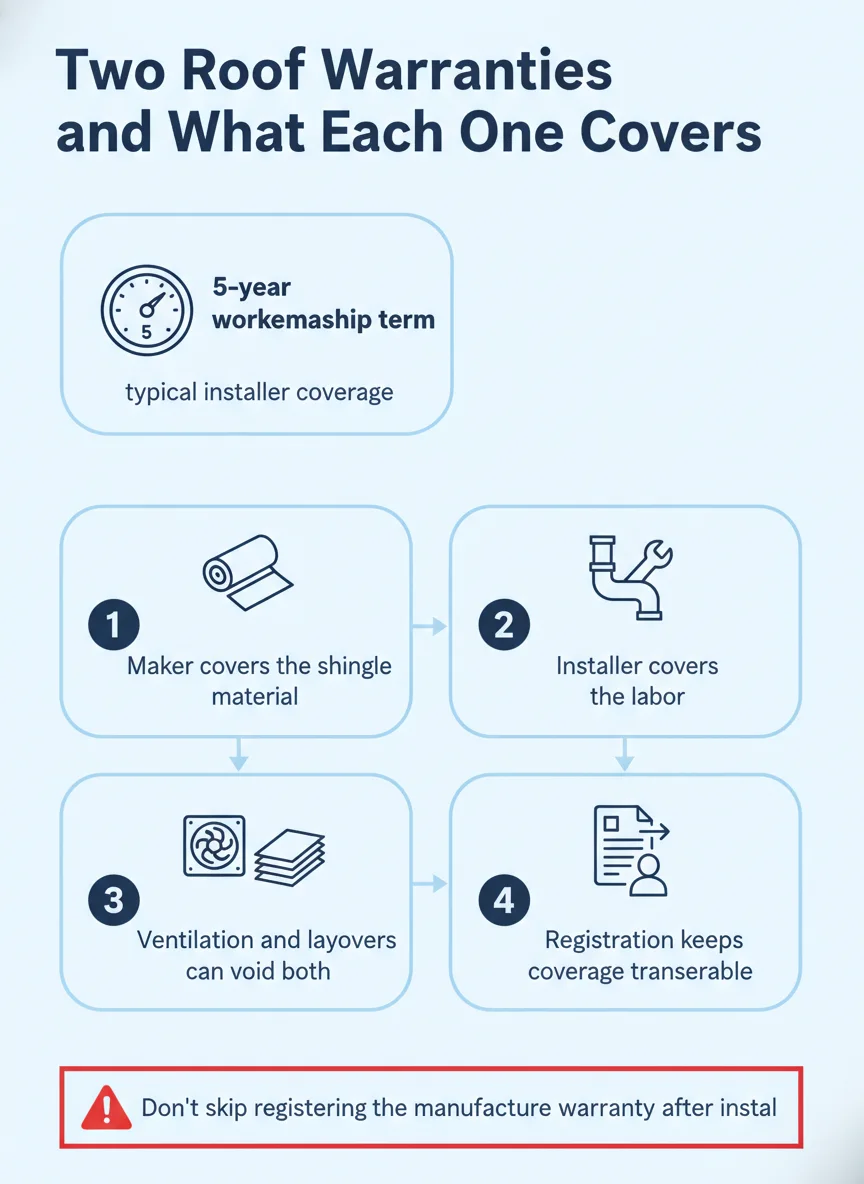
Every new roof across the Oklahoma City metro comes with two separate layers of protection, and homeowners often don't realize it until they're filing a claim and discovering the one they thought applied doesn't. The shingle manufacturer, companies like CertainTeed, Owens Corning, or GAF, warranties their own product. The company that installed your roof warranties their own labor. These are two different documents, two different companies standing behind them, and two different sets of exclusions.
This matters more in Oklahoma than in milder climates, because temperature swings, wind, and sun exposure put real stress on both the material and the installation. A shingle that's defective from the factory is a manufacturer issue. A leak at a flashing detail that was installed wrong is a workmanship issue. Knowing which is which before you ever need to use either one saves a lot of frustration later.
How each warranty actually works
Both warranties exist to cover failure, but they're triggered by different causes and backed by different parties, which is why reading the fine print on both matters more than most people assume.
The manufacturer warranty
The shingle maker's warranty covers defects in the product itself, things like shingles that crack prematurely, lose granules at an abnormal rate, or otherwise fail to perform as the manufacturer designed them to. It does not cover problems caused by how the roof was installed, how it's ventilated, or damage from outside forces like falling limbs.
Many manufacturer warranties require the installer to register the roof after completion to activate full coverage terms, and some offer extended coverage when installed by a certified contractor. If that registration step gets skipped, a homeowner can end up with a much thinner warranty than they thought they had, through no fault of the shingle itself.
The workmanship warranty
The installer's workmanship warranty covers the labor, meaning leaks or defects that trace back to how the roof was put together rather than a flaw in the material. That includes things like flashing details, fastening patterns, and underlayment work, the parts a homeowner can't easily inspect themselves once the shingles are down.
Our Roof Replacement work comes with a 5-year workmanship warranty in writing, on top of whatever the manufacturer covers on materials. It covers leaks or defects from the installation itself, and it transfers to the next owner if the home sells within that window.
| Coverage area | Manufacturer warranty | Workmanship warranty |
|---|---|---|
| What it covers | Defects in the shingle material itself | Leaks or defects from how it was installed |
| Who stands behind it | The shingle manufacturer | The installing contractor |
| Common exclusions | Poor ventilation, improper install, storm damage | Manufacturer defects, outside damage, neglect |
| Transfers to new owner | Depends on the specific terms | Often yes, check the written terms |
What each warranty actually protects on your home
Think of the manufacturer warranty as protection against a bad batch of material, something that's rare but does happen, and the workmanship warranty as protection against human error in the install. Both matter, but in practice, most leaks that show up in the first few years trace back to flashing, fastening, or ventilation choices made during installation rather than a defective shingle.
That's part of why choosing an installer matters as much as choosing a shingle line. A strong manufacturer warranty on a sloppy install still leaves you exposed, because the manufacturer won't cover a leak that's actually a labor issue, and you'd be relying entirely on the installer's workmanship warranty to make it right.
Step-by-step: what to check before you sign a warranty
Before work starts, or before you sign off on a finished job, walk through these checks so you know exactly what's covered and for how long.
- Get both in writing: Ask for the manufacturer warranty documentation and the installer's workmanship warranty terms, both in writing, not a verbal summary.
- Confirm the registration step: Ask whether the manufacturer warranty requires post-install registration and who is responsible for filing it.
- Check the workmanship term: Confirm how many years the workmanship warranty covers and exactly what counts as a covered defect.
- Ask about transferability: Find out whether either warranty transfers to a future buyer if you sell the home during the coverage period.
- Understand the exclusions: Review what voids each warranty, like improper ventilation, layovers, or unregistered systems, before work begins.
- Keep the paperwork: File both documents somewhere easy to find, since you'll need them if a leak shows up years down the road.
What voids these warranties, and what a denial usually looks like
Most warranty denials aren't about the shingle failing outright, they're about exclusions buried in the fine print that a homeowner never read closely. Knowing the common triggers ahead of time helps you avoid losing coverage you're paying for.
Ventilation and layover issues
Inadequate attic ventilation is one of the most common reasons a manufacturer denies a claim, since trapped heat can cause shingles to fail early in ways that look like a defect but get classified as an installation or ventilation problem instead. Installing new shingles over an old layer, rather than a full tear-off, can also reduce or void manufacturer coverage, since it hides the deck condition underneath.
If you're weighing a layover against a full tear-off for budget reasons, it's worth reading up on why most roofers recommend removing the old layer before deciding, since the warranty impact alone can outweigh the short-term savings.
Unregistered systems and missed paperwork
Some manufacturer warranties offer a basic tier automatically and a stronger extended tier only when the installer registers the job as a certified system within a set window after completion. Skipping that step, even accidentally, can quietly downgrade your coverage without anyone noticing until a claim gets filed.
This is a paperwork problem more than a quality problem, which is exactly why it's worth asking your installer directly whether registration is part of their process rather than assuming it happened automatically.
What a homeowner can check vs what needs a licensed roofer
A homeowner can absolutely read through both warranty documents, confirm the terms match what was verbally promised, and keep the paperwork organized for future reference. That part doesn't require a license, just attention to detail before and after the job.
What a homeowner generally can't do is evaluate whether an installation actually meets the standards a manufacturer warranty requires, like proper ventilation ratios or correct flashing technique, since those judgments require someone who installs roofs for a living and knows what a denial letter actually looks for.
If you're ever unsure whether a past repair or install was done to standard, a licensed roofer can walk the roof and flag anything that might put either warranty at risk before it becomes a bigger issue, whether that's a repair need now or a bigger question down the line, including whether it's past repair territory.
Getting warranty coverage right from the start
The easiest way to avoid a warranty headache later is to ask the right questions before the work starts, not after a leak shows up. Get both warranties in writing, confirm the registration process, and understand what voids each one so there are no surprises.
Homeowners across Moore, Norman, and the surrounding metro can reach out to All The Way Up Construction with questions about warranty coverage on a new roof or an existing one.
Frequently asked questions
What is the difference between a manufacturer warranty and a workmanship warranty?
The manufacturer warranty covers defects in the shingle material itself, things like premature granule loss or a product that fails to perform as designed. The workmanship warranty covers the installer's labor, meaning leaks or defects that trace back to how the roof was put on rather than the shingle itself.
Do roof warranties transfer to a new owner if I sell my house?
It depends on the specific warranty terms, so check the paperwork before you sell or buy. Our workmanship warranty is 5 years and transfers to the next owner, which is worth mentioning during a home sale since it can reassure a buyer.
Can poor ventilation void my roof warranty?
Yes, inadequate attic ventilation is one of the most common reasons manufacturers deny a material warranty claim, since trapped heat and moisture can cause shingles to fail early in ways the warranty doesn't cover. This is one reason a qualified installer checks your ventilation during a replacement, not just the shingles going down.
Does installing a new roof over an old layer affect the warranty?
Often, yes. Many manufacturers either reduce coverage or void it entirely on a layover installation, since they can't verify the deck condition or confirm proper ventilation underneath the old layer, which is a big reason most roofers recommend a full tear-off instead.
What should I ask my roofer before signing a warranty?
Ask what the workmanship warranty specifically covers, how long it lasts, whether it transfers if you sell, and whether the manufacturer warranty requires registration after install. Get the answers in writing rather than taking a verbal promise at face value.