
What Shingle a Roof Gets, and Why It's Not One-Size-Fits-All
Across the Oklahoma City metro, roofs deal with a wide swing in conditions over a single year, baking sun in July, hailstorms in spring, wind that doesn't let up much in between. The shingle line a home gets installed with has to handle all of that, not just look good on install day. That's why we install architectural shingle lines from CertainTeed, Owens Corning, and GAF rather than treating every job as a one-size-fits-all swap.
Homeowners researching a Roof Replacement often assume one shingle is basically the same as the next. In practice, the differences show up years down the road, in how well the granules hold on through UV exposure, how the shingle performs in gusts, and how consistent the color stays over time. Picking the right line for a given home, and then installing it the way the manufacturer specifies, is most of what determines how long a roof holds up.
Why We Install These Three Lines
CertainTeed Landmark, Owens Corning Duration, and GAF HDZ are all established architectural shingle lines with a long track record in markets that see the same mix of sun, wind, and hail that Oklahoma does. Each has its own construction details, but they share the same basic architecture: a fiberglass mat base, asphalt coating, and a laminated, dimensional profile that's heavier than a basic three-tab shingle.
Built for Wind and Weather Swings
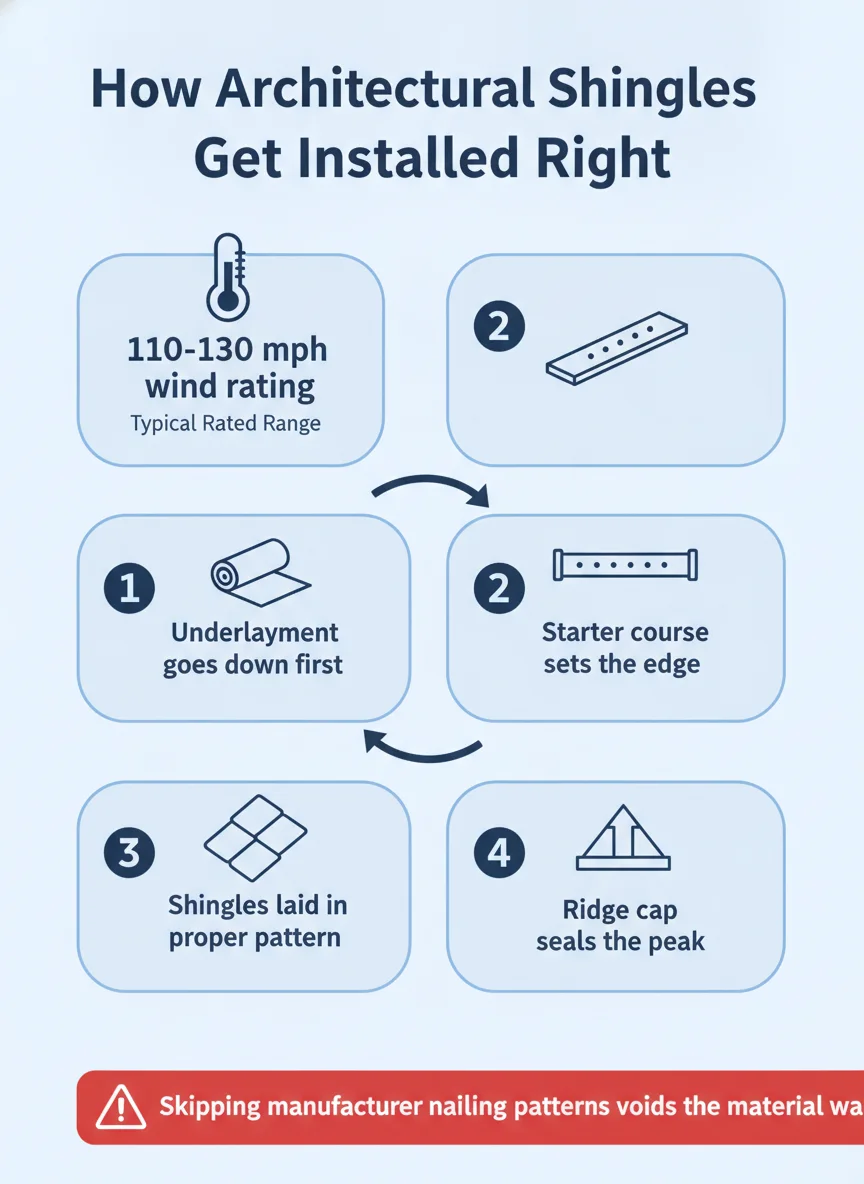
Architectural shingle lines like these are typically engineered and rated for wind resistance well above a standard three-tab shingle, with published ratings commonly in the 110 to 130 mph range when installed according to the manufacturer's nailing pattern. That rating isn't automatic though, it only holds if the install follows the spec sheet for that exact product.
Oklahoma sits in a region that sees enough wind events in a given year that this matters more than it would somewhere milder. A shingle that's rated correctly and installed correctly gives a home a real buffer against the kind of gusts that pull lesser materials loose at the tab.
Consistent Look Across the Whole Roof
Because these are established, widely manufactured lines, color runs stay consistent from bundle to bundle, which matters if a Roof Repair ever needs a patch years after the original install. Matching an off-brand or discontinued shingle later can be difficult, sometimes impossible, which leaves a visible patch on an otherwise clean roof.
Sticking with widely available, well-documented lines also means replacement material is easier to source if a section ever needs attention after a storm, rather than hunting down a shingle that's no longer in production.
| Shingle Line | Profile | Best Suited For |
|---|---|---|
| CertainTeed Landmark | Dimensional, laminated | Homeowners wanting a classic, textured look with broad color options |
| Owens Corning Duration | Heavier laminated profile | Homes wanting a more pronounced shadow line and added granule durability |
| GAF HDZ | Dimensional with wider nailing zone | Homes where installation consistency and nail placement margin matter most |
What's Actually in an Architectural Shingle
An architectural shingle is built in layers. A fiberglass mat forms the base, which gets coated in asphalt and embedded with mineral granules on the exposed surface. The dimensional, laminated construction, two layers bonded together, is what gives these shingles their thicker look and their added resistance to wind lift compared to a flat three-tab design.
The granules on top aren't just cosmetic. They shield the asphalt layer underneath from direct UV exposure, which is the main thing that breaks asphalt roofing down over time. As granules wear and shed, usually gradually over the life of the roof, the asphalt underneath becomes more exposed, which is part of why a roof nearing the end of its life starts losing granules faster.
Step-by-Step: How a Shingle Roof Gets Installed
The shingle itself is only half the equation, the install determines whether it performs the way the manufacturer intended. Here's the general sequence a crew follows on a tear-off and reroof.
- Deck inspection: The crew checks the roof deck for soft spots or damage once the old material is off, since shingles need a sound, flat surface underneath.
- Underlayment installed: A water-resistant underlayment goes down across the whole deck as a secondary barrier beneath the shingles.
- Flashing set: Flashing goes in around valleys, vents, and any penetrations where water is most likely to find a way in.
- Starter course laid: A starter strip runs along the eaves to give the first row of shingles something to seal against and resist wind lift at the edge.
- Shingles laid in courses: Shingles go up row by row with the exposure and offset pattern the manufacturer specifies for that product line.
- Nailing pattern followed: Each shingle gets nailed in the manufacturer's specified zone and nail count, which is what keeps the published wind rating valid.
- Ridge cap and cleanup: Ridge cap shingles finish the peak, and the crew does a final sweep for stray nails and debris before leaving the property.
What a Well-Installed Shingle Roof Should Look Like
Straight Lines and Even Exposure
From the ground, a properly installed shingle roof should show straight, even courses with consistent exposure row to row. Wavy lines or inconsistent spacing usually point to a rushed install or a crew not following the manufacturer's layout guidance, and it's worth asking about if you're reviewing a finished job.
Color should also read consistently across the whole roof plane, without noticeable patches of lighter or darker shingles, which can happen if bundles from different production runs get mixed without attention to lot matching.
Tight Seals at Valleys and Penetrations
Valleys, vent boots, and any place a pipe or fixture comes through the roof are where leaks most often start, not out in the open field of shingles. A well-installed roof shows clean, tight flashing work at every one of these spots, with no exposed nail heads or gaps visible.
If you're ever evaluating a finished roof, these transition points are worth a closer look than the open shingle field, since that's where installation quality shows up first.
DIY vs. Calling a Licensed Roofer
Shingle selection is something a homeowner can research and have an informed opinion on, comparing color options, profile styles, and published warranty terms between lines before a project starts. That part is reasonable to do on your own time.
The installation itself is a different story. Correct nailing patterns, proper underlayment coverage, flashing details at valleys and penetrations, and safe work at height are all things a licensed, experienced crew handles routinely and a homeowner usually isn't equipped to do safely or correctly. An incorrect nailing pattern alone can void a manufacturer's warranty even if every other part of the job looks fine.
If you're already seeing granule loss, curling edges, or exposed nail heads on an existing roof, that's a sign to get a professional look rather than attempt a patch yourself. For more on when those signs mean it's time to stop patching, see Three-Tab, Architectural, and Designer Shingles: What the Grades Actually Mean.
Choosing the Right Shingle for Your Home
There's no single best shingle for every home, the right choice depends on the look you want, the home's roof pitch, and how long you want the material to perform before it needs attention again. Comparing published wind and warranty specs between lines, rather than going on brand name alone, is the most useful way to narrow it down.
Homeowners in Moore and across the metro who want to talk through which of these lines fits their home can reach out to All The Way Up Construction for a straightforward look at the options.
Frequently asked questions
What's the difference between architectural and three-tab shingles?
Architectural shingles are made from two laminated layers that create a thicker, dimensional look and generally hold up better to wind than a flat three-tab shingle. Most homes built or reroofed in the last 15 to 20 years use architectural shingles for that reason.
Do all architectural shingles perform the same?
No, performance varies by manufacturer and product line, mainly in the wind rating, the algae resistance built into the granules, and the warranty term the maker backs it with. The brand matters less than confirming the specific line's published specs match what your home needs.
How long do architectural shingles last in Oklahoma?
Most quality architectural shingle lines are built for 25 to 30 years of service life under normal conditions, though Oklahoma's sun, wind, and temperature swings tend to push wear toward the lower end of that range. A correct install matters as much as the shingle itself.
Does the shingle brand affect the installation process?
The core install steps stay the same across brands, underlayment, starter strip, proper exposure, and nailing pattern, but each manufacturer publishes its own nailing and ventilation specs that a crew has to follow to keep the warranty valid. That's why reading the installation instructions for the specific product matters.
Can I mix shingle brands on one roof?
It's not recommended. Different lines vary slightly in thickness, color consistency, and exposure, so mixing brands can create an uneven look and may complicate a warranty claim if something goes wrong later.