
Why Shingle Grade Matters for Homes in the Oklahoma City Metro
When a homeowner in Moore, Norman, or anywhere else in the metro gets a quote for a new roof, the line item that says "shingle" hides a lot of variation. Not every shingle is built the same way, and the grade on your quote affects how the roof looks, how it holds up to wind, and roughly how long it should last before it needs attention again.
Oklahoma weather doesn't go easy on a roof. Between summer heat, UV exposure, and wind events that come through the plains, the shingle grade you choose has a real effect on how your roof performs over the years. Understanding what three-tab, architectural, and designer actually mean helps you compare quotes apples to apples instead of guessing at what you're paying for.
What Actually Separates the Three Grades
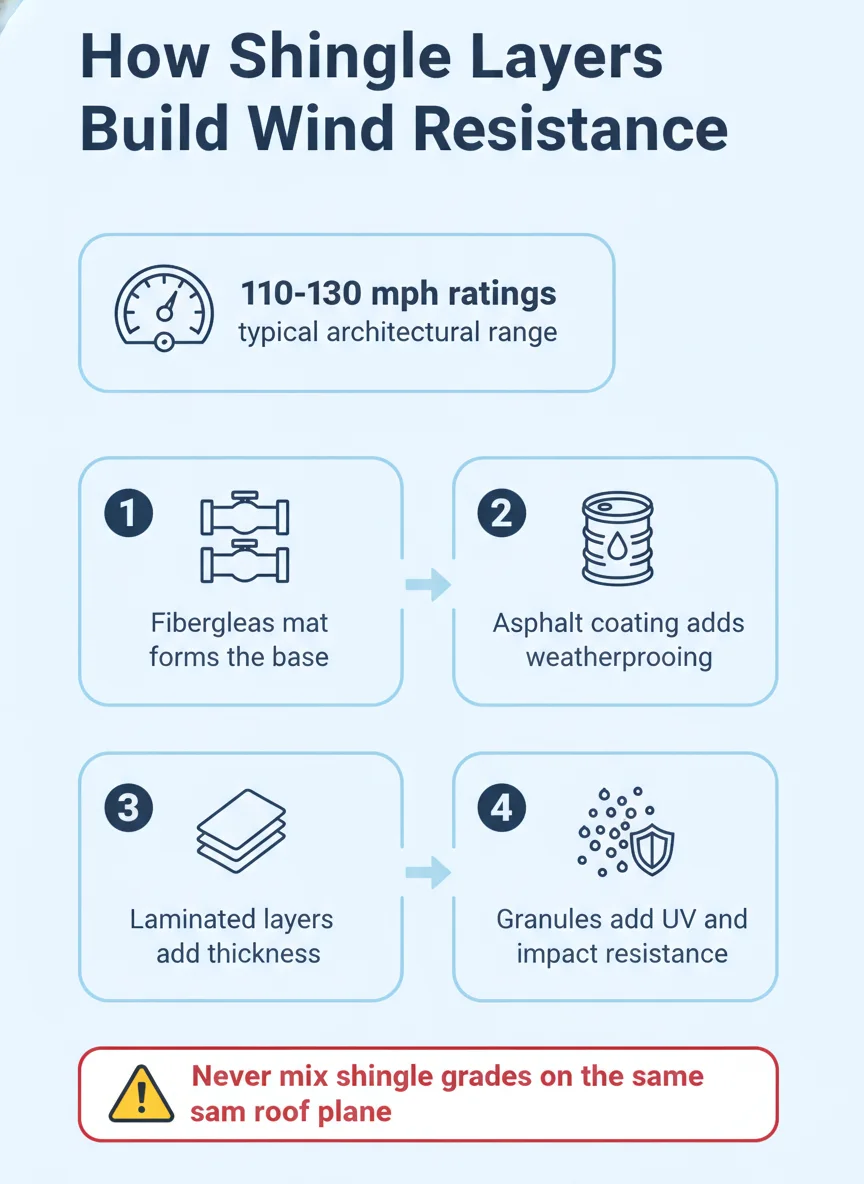
The core differences between shingle grades come down to how many layers of material are laminated together, how much each shingle weighs per square, and the wind rating that weight and construction earns in manufacturer testing. More layers generally means a thicker, more dimensional shingle with a stronger rating, though the exact numbers vary by manufacturer and product line.
Layers and Weight
Three-tab shingles are a single flat layer of asphalt-coated fiberglass cut into three even tabs, which is where the name comes from. They're the lightest of the three grades and have been an industry standard for decades, though they've largely been replaced by architectural shingles on new builds and replacements.
Architectural shingles, sometimes called laminated or dimensional shingles, are built from two or more layers bonded together. That extra layer adds weight and thickness per square, which is part of why they tend to carry a longer expected service life range in published manufacturer data compared to a single-layer three-tab shingle.
Wind Rating and Look
The added thickness in architectural shingles typically translates to a higher wind rating in manufacturer testing, which matters in a region that sees its share of wind events. Three-tab shingles usually carry a lower wind rating by comparison, simply because there's less material holding each shingle down.
Visually, three-tab shingles have a flat, uniform look with visible repeating tab lines. Architectural shingles have a staggered, shadow-line pattern that reads as more textured and dimensional from the street, which is one reason they've become the more popular choice even where cost isn't the deciding factor.
| Shingle Grade | Typical Construction | Typical Wind Rating Range |
|---|---|---|
| Three-tab | Single flat layer | Lower end of industry range |
| Architectural | Two or more laminated layers | Mid to upper industry range |
| Designer | Laminated with premium profile shaping | Comparable to architectural grade |
Anatomy of a Shingle: Mat, Asphalt, and Granules
No matter the grade, every asphalt shingle starts with a fiberglass mat as its base. That mat gets saturated and coated with asphalt, which is what gives the shingle its waterproofing and flexibility. The asphalt layer is also what gets thicker and more layered in architectural and designer grades.
On top of the asphalt, ceramic-coated mineral granules get embedded while the asphalt is still soft. Those granules do more than add color, they block UV rays from breaking down the asphalt underneath and add a layer of impact resistance. Granule quality and coverage is part of what separates a budget shingle from a premium one within the same grade.
Step-by-step: How a Shingle Grade Gets Chosen for Your Roof
Picking a grade isn't just about price. A good roof replacement conversation walks through the home's style, local wind exposure, and budget before landing on a product.
- Assess the home's style: A contractor looks at the home's architecture and roofline to see which shingle profile fits the look you're going for.
- Review wind exposure: Homes in more exposed areas may benefit from the higher wind rating that comes standard with architectural or designer grades.
- Compare warranty terms: Manufacturer warranties vary by grade, and a longer warranty is often tied to the thicker, multi-layer construction.
- Match existing material: If you're only replacing part of a roof or an addition, matching the existing shingle grade keeps the look and performance consistent.
- Set the budget range: Three-tab, architectural, and designer shingles sit at different price points, so budget often narrows the choice before style does.
- Confirm color and texture: Most manufacturers offer each grade in a range of colors, so you can usually find a close match across grades if you're budget-constrained.
What You'll Notice on the Roof After Installation
From the Curb
From the street, the difference between grades is mostly visual. Three-tab shingles give a flatter, more uniform look, while architectural and designer shingles create more depth and shadow across the roof plane, which is a big part of why they've become the more common choice on new installs.
Designer shingles push that look further with profiles meant to mimic wood shake or natural slate. On a prominent home or one where curb appeal is a priority, that upgraded look is often the main reason homeowners choose designer over standard architectural shingles.
Up Close
Up close, you'll notice the thickness difference right away if you compare a three-tab and an architectural shingle side by side. The laminated layers in architectural and designer shingles give them a noticeably heavier, sturdier feel, which is part of why they tend to lay flatter and tighter against the deck.
Granule coverage and color blending are also easier to see up close. Higher-grade shingles often use more varied granule blends to create the shadow-line effect that reads well from a distance but shows more texture and dimension when you're standing right under the eave.
DIY vs Calling a Pro for Shingle Selection
Researching shingle grades, comparing manufacturer warranty terms, and narrowing down colors is something most homeowners can do on their own before ever calling a contractor. Manufacturer websites publish spec sheets for each product line, and that's a reasonable starting point for getting familiar with the options before a quote.
Where a licensed roofer earns their keep is matching the shingle grade to your specific roof structure, local wind exposure, and the way the deck and underlayment are prepped underneath. A higher wind rating on paper doesn't mean much if the installation underneath doesn't support it, which is why the fastening pattern and underlayment matter as much as the shingle itself.
If you're only patching a small section after storm damage, a pro can also tell you whether a close enough color and grade match exists, or whether a full-slope replacement is the more realistic path to keeping the roof looking uniform.
Choosing the Right Grade for Your Next Roof
Most replacements across the metro today land on architectural shingles, simply because they balance wind performance, appearance, and cost better than three-tab for the average home. Designer shingles still have their place for homeowners prioritizing a specific high-end look, but they're the exception rather than the default.
Whichever grade fits your home and budget, the installation underneath matters just as much as the product on top. All The Way Up Construction walks homeowners through these options before any shingle gets ordered, so you know exactly what's going on your roof and why.
Frequently asked questions
What is the difference between three-tab and architectural shingles?
Three-tab shingles are a single, flat layer cut into even tabs, while architectural shingles are laminated from two or more layers for a thicker, dimensional look. The extra layer in architectural shingles also typically earns them a higher wind rating and a longer service life range in industry testing.
Are designer shingles worth the extra cost?
It depends on the home and the look you want, since designer shingles mainly add premium profiles like wood-shake or slate styling rather than dramatically more protection than a quality architectural shingle. Homeowners usually choose them for curb appeal on a prominent home rather than for a performance gap.
Do three-tab shingles still get used today?
They're far less common now than they were a couple decades ago, mostly because architectural shingles have become the industry default for new installs. Three-tab shingles still turn up on budget-focused jobs or older homes being patched to match existing material.
How long do architectural shingles last compared to three-tab?
Architectural shingles generally carry longer manufacturer warranty terms and a longer expected service life range than three-tab shingles, largely due to their added thickness. Actual lifespan on either grade still depends heavily on local sun exposure, attic ventilation, and how the roof was installed.
Can I mix shingle grades on one roof?
No, mixing grades on the same roof plane is not recommended because the different thicknesses create uneven lines and can affect how water sheds at the seams. If you're matching an addition or a repair to existing shingles, your contractor should match the original grade as closely as possible.