
Why the Adjuster Meeting Matters So Much
For homeowners across the Oklahoma City metro, the adjuster visit is often the single appointment that determines how much of a repair or replacement gets covered. It's easy to treat it like a formality, but what the adjuster measures, photographs, and writes down that day becomes the basis for the insurance company's offer. A quick, disorganized walk-through can undercount damage that a slower, more thorough one would catch.
This matters most after wind or hail events, when damage isn't always obvious from the ground. A missing shingle is easy to spot, but bruised mat or cracked seals can be missed entirely if nobody who knows what to look for is paying close attention. That's why so many homeowners ask their roofer to be there in person rather than handling it solo.
What the Adjuster Is Actually Measuring
Adjusters aren't just eyeballing the roof and making a judgment call. They're trained to document damage in a specific, repeatable way so the insurance company has consistent numbers to work from, and that process has a few predictable parts worth understanding before the visit.
The Test Square
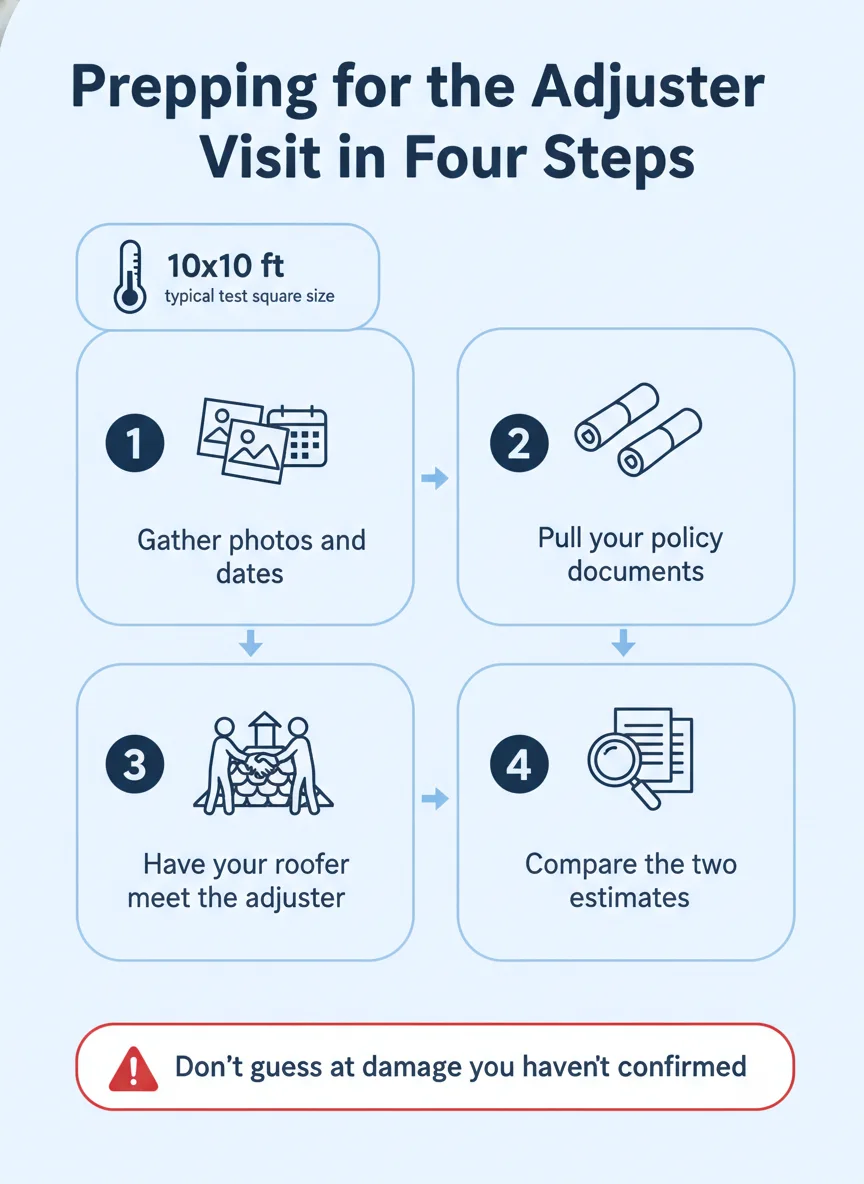
Most adjusters will mark off a test square, often around 10 feet by 10 feet, on one or more slopes of the roof. Inside that square they count hits, measure bruising, or note missing granules, then use that count to estimate damage across the entire roof surface.
Where that square lands matters. A square placed on a slope with less exposure to wind or sun can show fewer hits than one placed on the slope that actually took the brunt of the storm. A roofer who knows the property can point out which slopes saw the worst of it and ask that the square be placed accordingly.
Photos and Documentation
The adjuster will photograph the damage, the slopes, and often the flashing and penetrations around vents, chimneys, and skylights, since those spots are common leak points even when the rest of the roof looks fine. These photos become part of the official claim file.
Your own photos matter too. If you documented the roof before the storm, or took pictures immediately after, those add context the adjuster's single visit can't capture on its own, especially if weather or repairs have changed the roof's condition since the event.
| Situation | What the Adjuster Does | What Your Roofer Does |
|---|---|---|
| Hail or wind event | Marks a test square, counts hits, photographs damage | Walks the roof with the adjuster, points out all affected slopes |
| Hidden leak discovered later | Reviews new photos and may schedule a follow-up visit | Documents the leak source and timeline for the supplemental claim |
| Estimate disagreement | Reviews supplemental documentation if submitted | Provides measurements, photos, or a written estimate to support the difference |
What to Have Ready Before the Adjuster Shows Up
Walking into the appointment prepared saves time and reduces the chance that something important gets missed. The goal is to make it easy for the adjuster to see the full picture, not just what's visible from one angle on one day.
Pull together your policy paperwork, especially the declarations page and any endorsements related to wind or impact damage. Have dates written down, when you first noticed an issue, when the storm occurred, when you called your roofer. A simple timeline helps everyone stay on the same page about what happened and when.
Step-by-Step: Getting Ready for the Adjuster Visit
A little organization ahead of time makes the actual appointment go faster and gives your roofer what they need to advocate for a fair inspection.
- Pull your policy: Have your declarations page and any wind or storm endorsements on hand so coverage questions can be answered on the spot.
- Gather dated photos: Collect any pictures of the roof before and after the event, including timestamps if your phone saved them.
- Call your roofer first: Schedule your roofer's visit to happen before or alongside the adjuster so they can walk the roof together.
- Write down a timeline: Note when the storm happened, when you noticed damage, and when you filed the claim.
- Clear access points: Make sure ladders can reach the roof and attic access isn't blocked, since the adjuster may check both.
- Ask for a copy: Request a copy of the adjuster's report and photos for your own records once the visit wraps up.
What You'll Learn Once the Report Comes Back
After the visit, the adjuster compiles a report that lists the damage found, the estimated repair scope, and a dollar figure the insurance company is prepared to pay. This is where homeowners sometimes get surprised, especially if the report's scope is narrower than what the roofer sees as necessary.
When the Numbers Match
If your roofer's assessment lines up closely with the adjuster's report, the claim usually moves forward smoothly. This tends to happen when both parties walked the roof together and agreed on the extent of the damage during the visit itself.
Even in these cases, it's worth reading the report closely. Make sure every affected area was noted, including less visible damage around flashing, vents, or valleys, since those sections are sometimes left off if the inspection moved quickly.
When the Numbers Don't Match
It's common for a roofer's estimate to come in higher than the adjuster's, particularly when hidden damage surfaces during the actual repair or replacement process. This isn't unusual, and most insurers have a process for reviewing supplemental documentation.
Your roofer can typically submit additional photos, measurements, or a written explanation of what the original report missed. This is one of the most valuable things a roofer does in the claims process, translating what they see on the roof into language the insurance company can act on.
What You Can Handle Yourself vs. What Needs a Pro
There's plenty a homeowner can do without climbing a ladder. Gathering your policy documents, writing down a timeline, and taking ground-level photos of visible damage are all things you can and should do before anyone shows up.
Getting on the roof itself is a different story. Walking slopes to assess granule loss, cracked flashing, or soft decking takes training most homeowners don't have, and the risk of a fall or of causing more damage isn't worth it. This is squarely a job for a licensed roofer.
The claims conversation itself sits in between. You don't need a roofer to talk to your insurance company, but having one who's walked the roof and can speak specifically to what the adjuster measured tends to produce a more accurate outcome than going it alone, especially when the damage is uneven or spread across multiple slopes.
Getting the Adjuster Visit Right the First Time
The adjuster meeting isn't something to wing. A little preparation, the right paperwork, and a roofer who can walk the property alongside the adjuster all add up to a report that actually reflects the damage, which is the foundation for everything that happens next with your claim. For more on what comes after, read our guide on roof replacement: repair or replace.
Homeowners in Norman and across the metro deal with this process after nearly every major wind or hail event, and getting it right the first time saves a lot of back-and-forth later. All The Way Up Construction walks these inspections with homeowners regularly and can help make sure nothing gets missed.
Frequently asked questions
Should I be on the roof when the adjuster inspects it?
You don't need to climb up there yourself, and most homeowners shouldn't. What matters more is having your own roofer present on the ground or up top with the adjuster so someone representing your interests sees exactly what gets measured and photographed.
What is a test square and why does the adjuster use one?
A test square is a marked-off section of roof, commonly about 10x10 feet, where the adjuster counts hits or wear to estimate damage across the whole roof. Where that square gets placed can change the outcome, which is one reason having a roofer walk it with the adjuster helps.
What should I have ready before the adjuster arrives?
Have your policy documents, any dated photos of the damage or the storm event, and a timeline of what you've noticed and when. The more organized that information is, the faster and smoother the inspection tends to go.
What happens if my roofer's estimate doesn't match the adjuster's?
It's common for the two numbers to differ, and it doesn't mean either side is wrong on purpose. Your roofer can usually provide documentation like photos, measurements, or a supplemental estimate that explains the gap so the insurer can reconsider.
Can I just let my roofer deal with the whole insurance process?
Your roofer can handle a lot of the documentation and meet the adjuster on your behalf, but the claim itself is between you and your insurance company. Staying informed and keeping copies of everything protects you if questions come up later.