
Why This Decision Matters More in Oklahoma Than People Think
Homeowners across the Oklahoma City metro face this choice more often than they'd expect, usually when a contractor shows up for a repair and finds the existing shingles are already past their prime. The temptation to save time and money with a second layer is real, especially when the current shingles still look okay from the ground. But Oklahoma's swing between summer heat and winter freeze-thaw cycles puts extra stress on decking, flashing, and ventilation, and a layover makes all three of those harder to evaluate or fix.
This isn't just a cosmetic decision. What's under that top layer of shingles determines how long your next roof actually lasts, how it handles wind and rain, and whether small problems like a soft spot near a valley turn into a much bigger repair. Understanding what a layover hides, and what a tear-off reveals, puts you in a much better position before you sign off on either option.
What's Actually Happening When You Layer Shingles
A roof-over means a new layer of shingles goes directly on top of the old ones, fastened through the existing layer into the decking below. It's faster and generates less debris, which is why it's tempting. But it also means nobody sees the decking, the flashing, or the ventilation system during the install, because none of it gets exposed.
What a Layover Hides
Underneath that old layer could be decking that's gone soft from a slow leak nobody noticed, flashing around a chimney or vent pipe that's already failing, or insulation and ventilation gaps that are quietly shortening the life of whatever goes on top. None of these get caught during a layover because there's no reason to open things up.
The new shingles also sit less flat over a layover, since they're following the contour of the old layer underneath. That uneven surface can affect how well the new shingles seal and how they handle wind, which matters more in a region that sees its share of strong spring storms.
What a Tear-Off Reveals
Pulling the old layer off exposes the decking completely, so soft spots, rot, or old water staining become visible and fixable before anything new goes down. It also gives a roofer the chance to replace or repair flashing around valleys, chimneys, and skylights rather than just shingling over whatever is already there, which matters for skylights and flashing in particular since that's where most leaks start.
A tear-off also resets ventilation. Vents and intake points that have been slowly clogged or undersized get addressed instead of buried under another layer, which helps the new roof perform the way it's supposed to for its full lifespan.
| Factor | Roof-Over | Tear-Off |
|---|---|---|
| Decking inspection | Not possible, stays hidden | Fully exposed and checked |
| Flashing condition | Covered, issues continue | Replaced or repaired as needed |
| Install flatness | Follows old layer's contour | Lies flat on clean decking |
| Manufacturer warranty | Often reduced or voided | Typically full coverage applies |
What's Underneath Every Roof, Layer or Not
Every roof has three working parts regardless of how many shingle layers sit on top: the decking (the wood base everything is fastened to), the flashing (the metal that seals joints, valleys, and penetrations), and the ventilation system (intake and exhaust that keeps the attic from overheating or trapping moisture). All three need to function together for a roof to hold up.
A layover doesn't remove or repair any of these, it just adds a fourth layer on top and hopes the first three are fine. A tear-off gives direct access to inspect and fix all three before new material goes down, which is why most roofers consider it the more honest approach even when it costs more in labor.
Step-by-Step: How a Roofer Decides Between the Two
A straightforward process determines whether a layover is even a reasonable option, or whether a tear-off is the only responsible call.
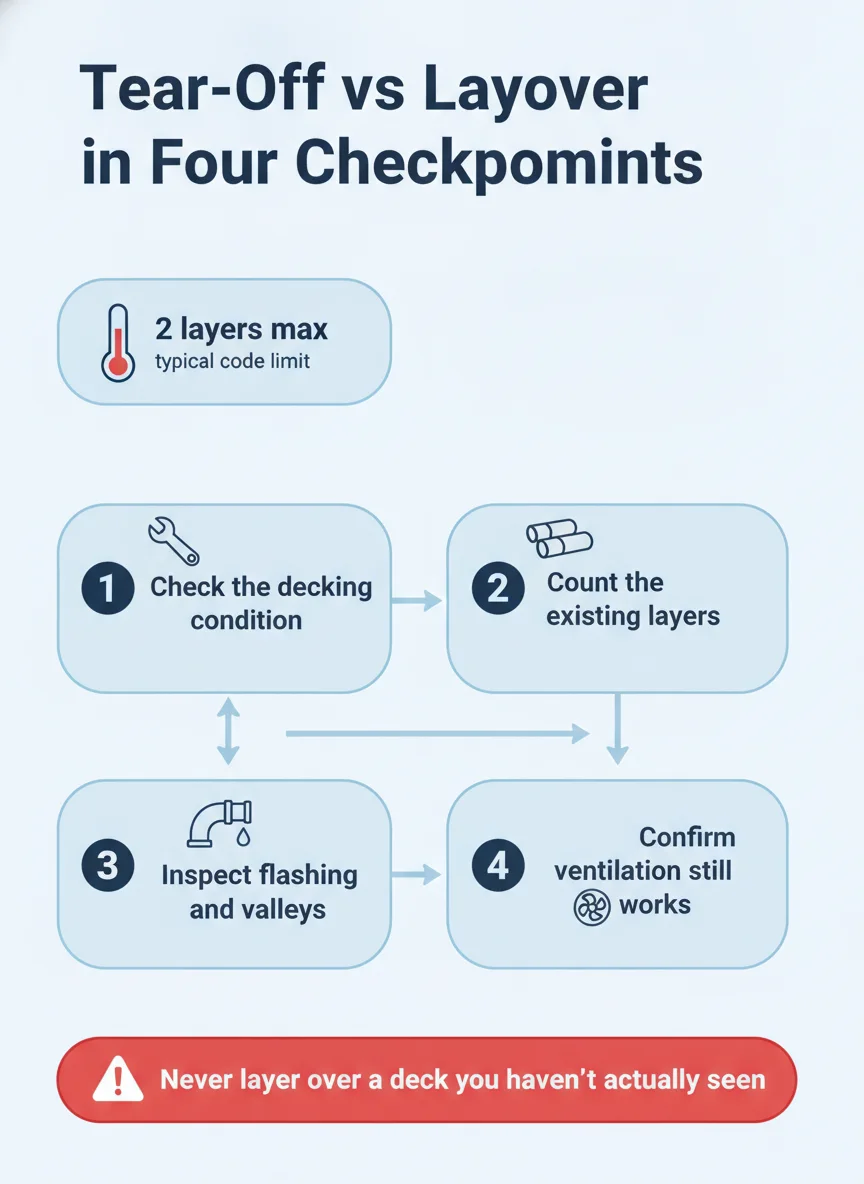
- Count existing layers: A roofer checks the shingle edges along the eaves to see how many layers are already there, since most codes cap it at two.
- Check decking from inside: A look from the attic can reveal staining, sagging, or daylight coming through that signals decking trouble below.
- Inspect visible flashing: Flashing around chimneys, vents, and valleys gets checked for rust, gaps, or lifted edges that a layover would bury.
- Review ventilation setup: Intake and exhaust vents get checked for blockage or undersizing that's been quietly affecting the attic.
- Weigh the warranty terms: Manufacturer warranty language gets reviewed since many reduce coverage on a layover install.
- Make the call: With decking, flashing, and ventilation accounted for, a roofer can recommend whichever approach actually fits the roof's real condition.
What You'll Usually Find Once the Old Layer Comes Off
Most tear-offs turn up at least a little surprise, even on roofs that looked fine from the ground. That's not a sign something went wrong, it's just what years of weather do to a roof system that's been out of sight.
Common Decking Issues
Soft or delaminated plywood near valleys, old nail holes that were never sealed properly, and water staining around chimneys or skylights are the most common finds. Most of these are straightforward to repair once they're visible, which is the whole point of pulling the layer off in the first place.
Common Flashing Issues
Rusted step flashing, caulk that's dried and cracked instead of a proper metal seal, and flashing that was never installed correctly the first time around all show up regularly. These are exactly the kind of fixes that prevent a brand new roof from leaking in the same spot the old one did.
What a Homeowner Can Check vs What Needs a Pro
A homeowner can do a quick visual check from the ground or the attic. Look for sagging rooflines, daylight through the attic boards, or water stains on ceilings below valleys and chimneys. These are signs worth mentioning to a roofer before any project starts, layover or tear-off.
Everything past that visual check needs a licensed roofer. Climbing onto the roof to count layers, pulling back shingles to check decking, and evaluating flashing all require the right experience and safety equipment. It's also the kind of work where a wrong call costs real money later, so it's worth having someone who does this daily make the final decision.
If you're already dealing with roof repair on a section of the roof, that's often the moment a tear-off versus layover conversation comes up naturally, since a repair crew can see firsthand what's happening underneath that one section.
Making the Right Call for Your Home
A layover isn't automatically the wrong choice. On a roof with one existing layer, sound decking, and flashing that's still in good shape, a roof-over can be a reasonable way to extend a roof's life without the full cost of a tear-off. The key is knowing that condition for sure rather than assuming it. Homeowners in Moore and nearby towns dealing with an aging roof can also read more on how long does a roof last in Oklahoma to get a sense of where their roof stands.
When in doubt, a tear-off gives you the clearest picture of what you're actually working with, and it sets up a roof replacement to perform the way it's supposed to for its full lifespan. All The Way Up Construction walks homeowners through both options honestly before any work starts.
Frequently asked questions
Can you put new shingles over old shingles?
In many cases yes, as long as there's only one existing layer and the decking underneath is sound, but most roofing codes cap it at two layers total. A layover skips the chance to inspect the decking and flashing underneath, which is the main reason most roofers steer homeowners toward a tear-off instead.
Is a roof-over cheaper than a tear-off?
A layover usually costs less upfront because it skips the labor and disposal of removing the old material, but it can cost more down the road if hidden rot or bad flashing surfaces later. The real savings depend on the condition of what's already up there, which you can't fully know without pulling the old layer.
Does a roof-over void the manufacturer warranty?
Many shingle manufacturers reduce or void their warranty coverage when shingles are installed over an existing layer instead of bare decking. Always check the specific warranty terms before deciding, since this varies by manufacturer and product line.
How do I know how many layers are already on my roof?
A roofer can usually tell by looking at the edges along the eaves and rakes, where layered shingles create a visible step. If you're not sure, a quick inspection before any project settles the question instead of guessing.
What problems can a layover hide?
A layover can hide soft or rotted decking, damaged flashing around valleys and penetrations, and ventilation that isn't working the way it should. None of those issues go away just because they're covered, they just get harder and more expensive to fix later.