
When a Storm Opens Your Roof in the Oklahoma City Metro
A limb through the deck, a chunk of shingles peeled back in straight-line wind, or a chimney flashing torn loose in a hailstorm all leave the same problem behind: an open path for water straight into your attic and ceiling. Across Moore, Norman, Oklahoma City, and the rest of the metro, this happens most often during spring and early summer storm cells, but it can happen any time a strong gust catches an already-weak spot in the roof.
What you do in the first 24 hours matters as much as the repair itself. Water that sits in insulation and drywall for a day causes a lot more damage than water that gets caught and diverted quickly. The goal in that first day isn't to fix the roof, it's to stop the bleeding and get a trained set of eyes on it fast.
Why the First Few Hours Make or Break the Damage
Every hour an opening sits uncovered, more water works its way into framing, insulation, and ceiling drywall. Wet insulation loses its ability to insulate and often has to be fully replaced rather than dried out. Wet drywall sags, stains, and can grow mold within a couple of days in warm, humid weather, which is common in Oklahoma summers.
Inside the House
The first move is always inside, not outside. Get people and pets clear of the room under the leak, then pull anything valuable or electronic away from the drip line. If water is pooling on a ceiling and starting to bulge, a small controlled hole with a screwdriver can relieve pressure and send the water down in one spot instead of letting the ceiling give way on its own.
Buckets, towels, and a tarp laid over furniture buy time while help is on the way. None of this stops the leak, but it keeps the damage contained to what's directly under the opening instead of spreading across the room.
Outside the House
From the ground, take photos of the visible damage: the hole, any missing shingles, bent flashing, or a limb still resting on the roof. Don't move the debris yourself. A fallen branch can be hiding a soft or broken section of decking underneath it, and shifting it without knowing what's there risks a bigger fall through.
Call a roofer as soon as it's safe to make the call. Describe what you're seeing and whether the leak is active. A crew that handles storm and hail damage regularly can usually tell over the phone how urgent the tarping is and what to bring.
| Situation | What it means | What to do |
|---|---|---|
| Active drip, no visible hole | Water is tracking from a hidden opening | Catch water indoors, call a roofer to locate the entry point |
| Visible hole or missing section | Direct path for wind-driven rain | Clear the room below, photograph from the ground, call for tarping |
| Limb resting on the roof | Possible hidden deck damage underneath | Do not move it yourself, let a crew assess before anything shifts |
| Sagging or bulging ceiling | Water weight building above drywall | Relieve with a small controlled hole, catch water below, call immediately |
What a Tarp Actually Does Once It's On
A properly installed tarp isn't just a sheet draped over a hole. It's secured with battens or boards along the edges, run past the damaged area in every direction, and tied down so wind can't get underneath and rip it loose. The overlap matters more than people expect; a tarp that only covers the hole itself still lets water run sideways under nearby shingles.
It's meant to be a stopgap. A tarp slows water intrusion and buys time until a full assessment and repair can happen, whether that's a patch, a section replacement, or a full roof replacement if the damage is extensive. It is not a fix, and it shouldn't be treated as one for longer than necessary.
Step-by-step: What to Do in the First 24 Hours
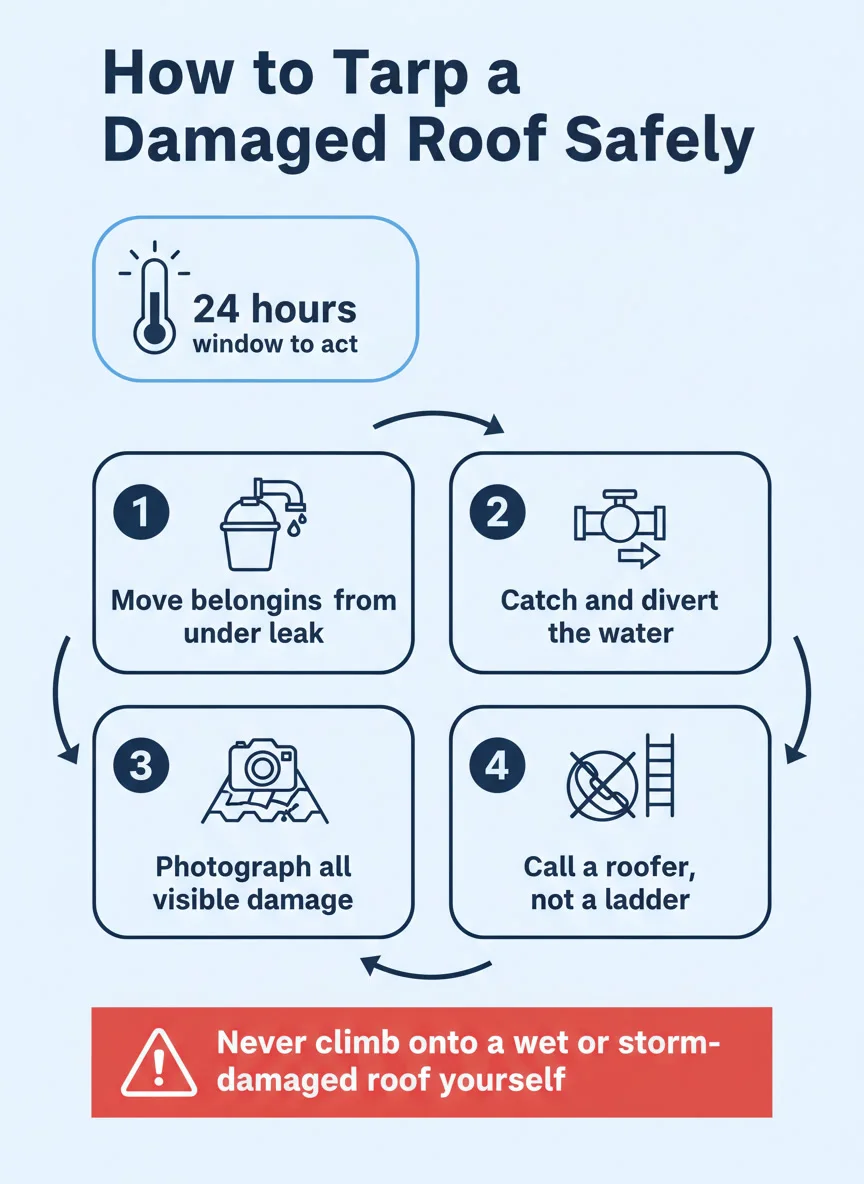
Here's the order that protects your home, your family, and your insurance claim at the same time.
- Clear the room: Move people, pets, and anything valuable out from under the active leak immediately.
- Catch the water: Set buckets or basins and lay towels or a tarp over furniture that can't be moved in time.
- Relieve ceiling pressure: If drywall is bulging, puncture a small controlled hole to let pooled water drain in one spot.
- Photograph everything: Shoot the ceiling stain, the room, and the roof from the ground before anything gets touched.
- Call a roofer: Describe the damage and ask how soon a crew can get a tarp on, especially if rain is still coming.
- Stay off the roof: Leave climbing and walking the damaged area to a crew that knows where it's safe to step.
- Keep your insurer informed: Call your policy's claims line once the roof is covered and share the photos you already took.
What You'll Find Once the Tarp Comes Off
When it's time to remove the tarp for a permanent repair, the extent of the damage usually becomes clearer than it looked from the ground. A single missing shingle can turn out to be hiding a soft spot in the decking underneath, especially if water sat there for more than a day before the tarp went on.
Limited Damage
If the opening was small and caught quickly, the fix is often a straightforward patch: replacing the damaged shingles, resealing flashing, and checking the decking underneath is sound before closing it back up. These repairs usually happen in a single visit once the tarp comes off.
This is the outcome you're aiming for by acting fast. Quick tarping keeps a small, contained problem from turning into a bigger one that spreads into the attic and ceiling below.
Extensive Damage
If the decking is soaked through, or the opening sat uncovered for a while before help arrived, the repair can grow to a section replacement or point toward a full re-roof depending on the overall condition of the roof. A crew will walk you through what they find and why a bigger scope makes sense before any work starts.
Either way, the tarp did its job if it kept water from spreading further than the original opening. That's the whole purpose of acting within the first day instead of waiting to see what happens.
What a Homeowner Can Handle vs. What Needs a Pro
Everything inside the house is fair game for a homeowner to handle right away: moving belongings, catching water, relieving ceiling pressure, and taking photos. None of that requires climbing or special equipment, and doing it fast genuinely limits the damage.
Anything on the roof itself is a different story. Walking a damaged roof means knowing where the decking is still solid, how to anchor a tarp so wind doesn't tear it loose overnight, and how to spot related damage nearby that isn't obvious from the ground. That's not a knock on a handy homeowner, it's just a different set of risks than most people deal with day to day.
The split is simple: protect what's inside the house yourself, and let a licensed crew handle what's above it. Trying to do both at once, especially in the middle of a storm, is how a bad day turns into an injury on top of a damaged roof.
Getting Through the First Day
The first 24 hours after a limb or a storm opens your roof are about containment, not repair. Clear the room, catch the water, document what you see, and get a crew out to cover the opening properly so the damage stops where it is instead of spreading into the structure overnight.
Once the immediate danger is handled, the real work of assessing and fixing the roof can happen on a clear day, with the full picture in view. For homeowners dealing with this in Moore or anywhere else in the metro, All The Way Up Construction is a call away when the sky opens something it shouldn't have.
Frequently asked questions
What should I do first if a tree branch punches a hole in my roof?
Get everyone clear of the room below and move furniture, electronics, and anything that can't get wet out from under the leak first. Once the area is safe, place buckets or tarps indoors to catch water and call a roofer to assess and cover the opening from outside.
Is it safe to climb up and tarp my own roof after a storm?
It's generally not a good idea, especially on a wet or windy day, because a storm-damaged deck can have soft or broken spots you can't see from the ground. A trained crew knows how to walk a damaged roof safely and anchor a tarp so it actually holds.
How long can a tarp stay on a roof before it needs a permanent fix?
A tarp is a short-term cover meant to stop active water intrusion, not a long-term solution, and it should come off as soon as a proper [roof repair](/services/roof-repair) or replacement can happen. Left too long, tarps wear through in wind and sun and can trap moisture underneath.
Do I need to call my insurance company before or after the roof gets tarped?
Document the damage with photos first, then call your insurer and get the roof covered as soon as you reasonably can, since most policies expect homeowners to prevent further damage once a problem is known. A roofer can usually tarp the same visit they assess the damage, which helps on both fronts.
What does emergency tarping actually cover that a bucket under the leak doesn't?
A properly secured tarp stops wind-driven rain and debris from getting into the attic and walls, not just the spot directly under the hole. A bucket only catches what's already dripping into the room, so the tarp is what actually slows the damage spreading.