
A Small Roof Problem, a Big Decision
A handful of shingles lift in a windstorm, or a brown ring shows up on a bedroom ceiling after a hard rain, and the instinct for a lot of homeowners in the Oklahoma City metro is to call whoever's available and cheapest. A general handyman can seem like the obvious answer for something that looks like a quick fix.
The trouble is that roof problems rarely stay as small as they first appear. What looks like one loose shingle is often a sign of nail backing out across a section of the roof, or a flashing seam that's been letting water in for months. Knowing which situation you're in changes who should be doing the work, which is the real question behind roofer versus handyman.
Why This Decision Matters More Than It Looks
Roofing sits in an odd spot among home repairs. It looks simple from the ground, a few pieces of shingle nailed down over plywood, but the way water actually moves across a roof surface, around penetrations, and into valleys is specialized knowledge that most general contractors don't handle daily.
What a Licensed Roofer Brings
A roofer who works on this surface every day knows how to match the existing shingle line so a patch doesn't stand out, how flashing has to overlap at a chimney or wall to actually shed water, and how a single bad nail pattern can cause a leak two rooms away from where the water enters. That knowledge comes from repetition, not a general skill set.
A roofer also typically carries insurance built for the job and offers a written workmanship warranty on the repair, something a general handyman rarely provides. If a roof repair doesn't hold, a roofer has a reason and a process to come back and fix it, which matters more than it sounds like until you're the one waiting on a return call.
Where a Handyman Is Fine
Not everything on a roof needs a specialist. Clearing leaves out of a valley you can safely reach, resealing a loose piece of trim at the fascia, or checking gutters for debris are reasonable handyman tasks that don't touch the shingle system itself.
A handyman is also a fine choice for interior patch work after a leak has been fixed, like repainting a water-stained ceiling or replacing drywall. The roof repair itself and the cosmetic cleanup afterward are two different jobs, and splitting them between a roofer and a handyman is often the most practical approach.
| Job | Roofer | General Handyman |
|---|---|---|
| Matching shingle color and line | Trained to blend the patch into the existing roof | May not have access to matching materials |
| Flashing around chimneys or skylights | Understands overlap and sealing points | Often not trained on flashing systems |
| Written repair warranty | Commonly provided | Rarely offered |
| Interior ceiling or drywall repair after a leak | Usually refers out or focuses on the roof only | Well suited to this type of work |
The Roof System Behind a Simple-Looking Patch
Underneath the visible shingles sits an underlayment layer, a deck of plywood or OSB, and flashing at every point where something interrupts the roof surface, a vent pipe, a chimney, a skylight. A repair that only addresses the top layer without checking what's underneath can look fine for a season and then fail again once water finds the same weak point.
This is why a roofer will usually pull back the surrounding shingles before patching, not just lay a new one over the problem spot. It takes more time than a surface fix, but it's the difference between a repair that lasts and one that needs a second visit within a year.
Step-by-Step: How to Decide Who to Call
A short checklist can keep you from hiring the wrong person for the job, or paying twice when a quick fix doesn't hold.
- Identify the location: Figure out if the problem is on the roof surface itself or a ground-level item like a gutter, fascia board, or downspout.
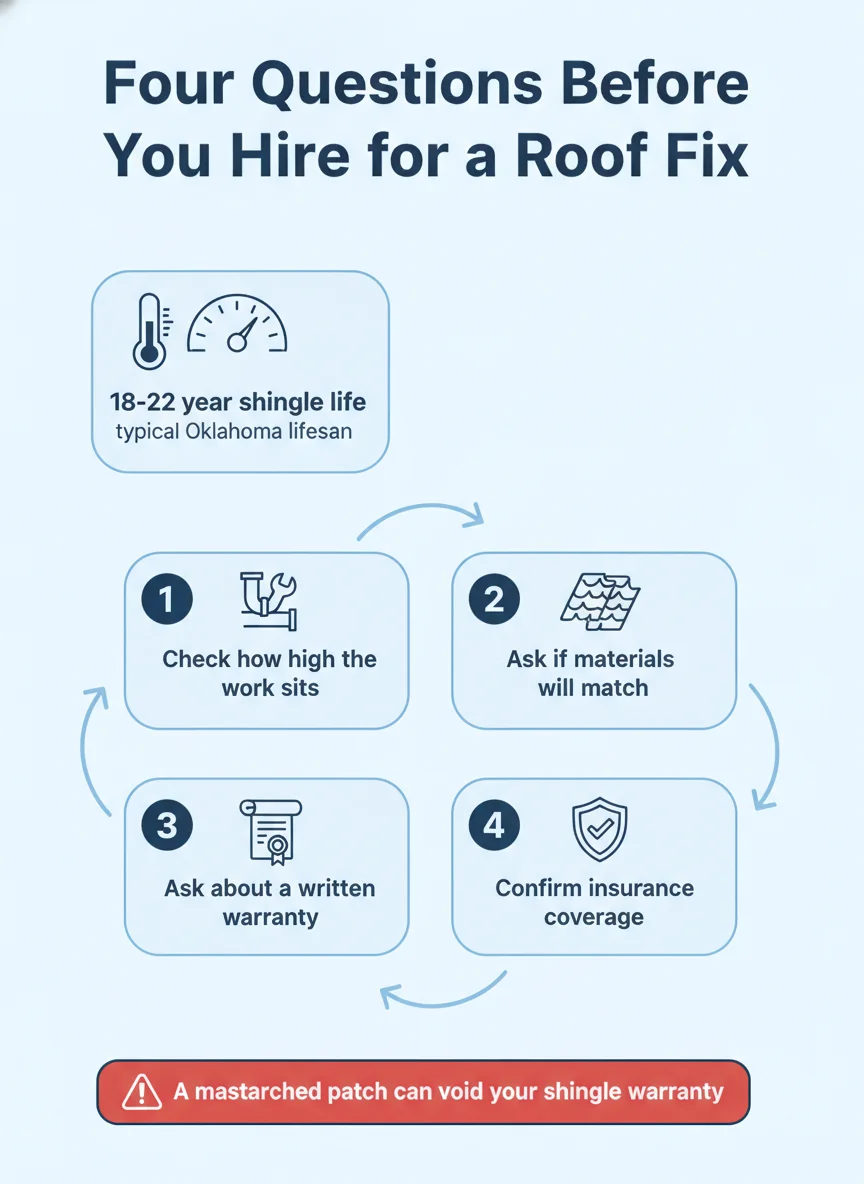
- Check the height and access: Anything that requires walking the roof slope or working near the edge is a job for someone equipped and trained for it.
- Look for flashing involvement: Leaks near a chimney, vent pipe, or skylight almost always point to a flashing issue that needs roofing-specific repair.
- Ask about matching materials: If the repair needs to blend into existing shingles, confirm the person doing the work has access to a matching product line.
- Ask about a warranty: A roofer who stands behind the repair in writing gives you recourse if the fix doesn't hold through the next storm.
- Separate interior cleanup: Once the roof itself is fixed, a handyman can handle drywall, paint, or trim repair inside the home.
What You'll Usually Find Once You Look Closer
The Problem Is Bigger Than One Shingle
It's common for a homeowner to call about one visible issue and learn that several shingles nearby have also loosened, cracked, or lost granules. Wind and sun stress a whole section of roof at similar rates, so one failure point is often an early sign rather than an isolated event.
A roofer walking the area for one repair will typically check the surrounding shingles too, since it takes little extra time and prevents a callback for a problem that was already visible. A handyman focused only on the reported issue may not think to look.
The Fix Holds Differently Depending on Who Did It
A patch done with the right nailing pattern, sealant, and shingle overlap can last as long as the surrounding roof. A quick caulk-and-cover fix might stop a drip for a few months but rarely survives a full season of Oklahoma wind and temperature swings.
If you're unsure whether a past repair was done correctly, or whether the underlying issue has already spread, When a Roof Is Past Repair covers the signs that point to a bigger project than a patch.
DIY, Handyman, or Roofer: Matching the Job to the Right Person
A homeowner can reasonably handle visual checks from the ground, clearing visible debris from a valley with a hose, or watching for granules collecting in a gutter after a storm. These don't involve walking the roof or altering any part of the system.
A handyman fits well for ground-level repairs and interior fixes once the roof problem itself has been resolved, things like trim, siding near the roofline, or drywall patching. These jobs use general carpentry and finishing skills rather than roofing-specific knowledge.
Anything involving the shingle surface, flashing, or a suspected leak source belongs with a licensed roofer. The cost of getting it wrong, a leak that returns, a warranty gap, or water damage that spreads into the attic, usually outweighs whatever was saved on labor up front. See What Drives the Cost of Roof Repair in Oklahoma for how repair scope actually gets priced.
Making the Call With Confidence
A small roof problem doesn't have to turn into a big decision if you know what to look for. Ground-level and cosmetic work can usually go to a handyman, but anything touching the shingle surface, flashing, or a suspected leak is worth handing to someone who works on roofs every day, whether you're in Moore or across towns like Norman.
If you're not sure which category your repair falls into, a quick look from a professional costs little and can save a lot of guessing. All The Way Up Construction is available to take a look and tell you straight whether it's a patch job or something more.
Frequently asked questions
Can a handyman fix a roof leak?
A handyman can sometimes patch a small, accessible leak, but finding the actual source of a leak often takes roofing-specific experience because water travels along the decking before it shows up on a ceiling. If the leak is near a flashing point, a chimney, or a skylight, a roofer is the safer call.
Is it cheaper to hire a handyman instead of a roofer?
A handyman's hourly rate is often lower, but cost isn't the same as value once you factor in matching materials, warranty coverage, and the risk of a repeat visit. A roofer who does this work daily typically gets it right once, which can save money over the life of the roof.
Do handymen carry insurance for roof work?
Insurance coverage varies a lot by individual handyman, and many general handyman policies exclude work done above a certain height or on a roof surface specifically. A licensed roofing contractor carries coverage built for the job, which protects you if something goes wrong on your property.
What roof repairs are safe to do myself?
Ground-level tasks like clearing debris from a valley you can see from a ladder, or checking for obvious missing shingles with binoculars, are reasonable for a homeowner. Anything that requires walking the roof surface, cutting into flashing, or matching shingle lines is better left to a professional.
Will a handyman repair affect my roof warranty?
It can. Manufacturer and workmanship warranties are often tied to installation by a qualified roofer, and a repair done outside that process can create a gap in coverage. Check your warranty terms before letting anyone other than your original roofer touch the repair.